The role of the head of state is defined by the Constitution of the Fifth Republic, particularly in Article 5: "The President of the Republic ensures the respect of the Constitution. He ensures the continuity of the State and is the guarantor of national independence, the integrity of the territory, and the respect of treaties."
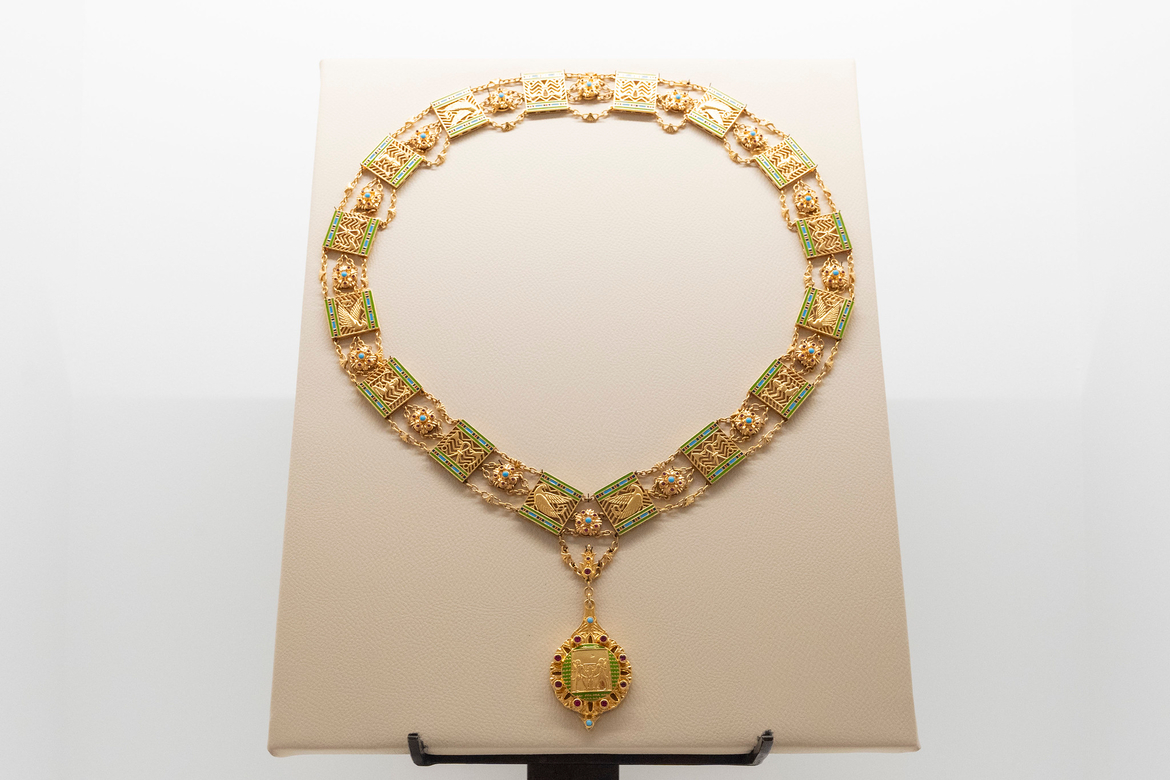
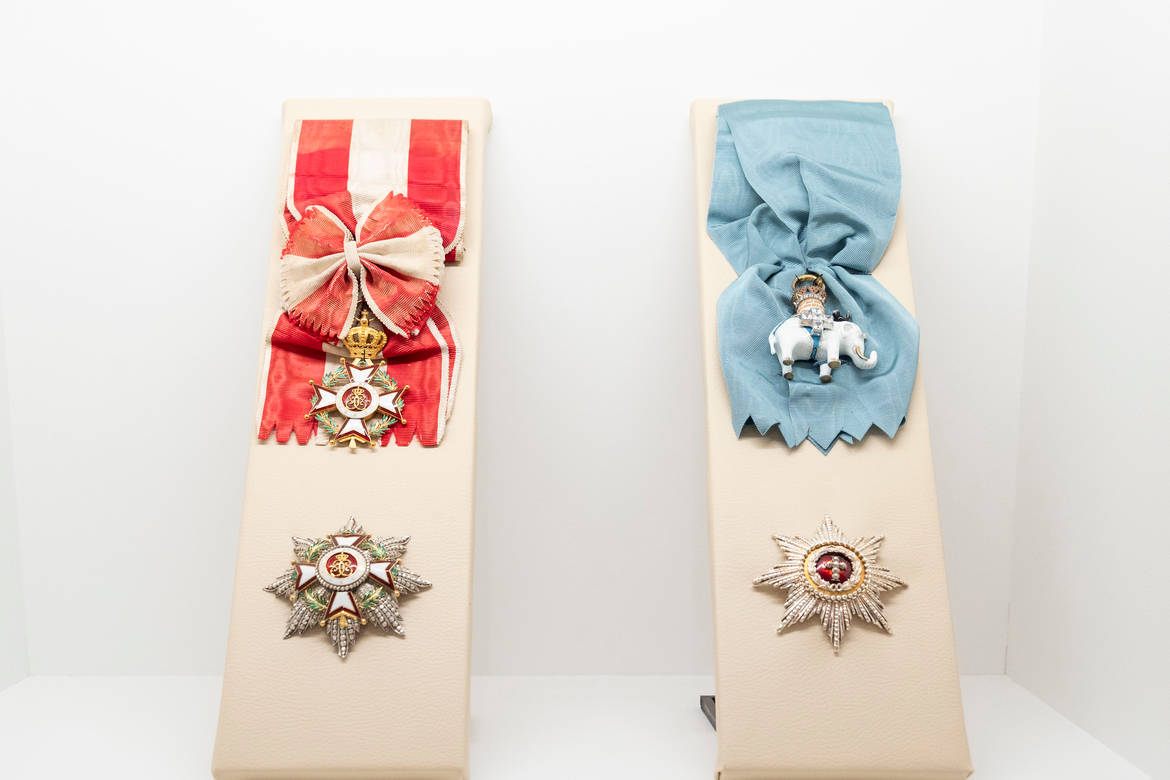
In addition to his political and constitutional powers, the head of state holds a set of honorary titles inherited from French national history, testifying to the historical relations with other states.
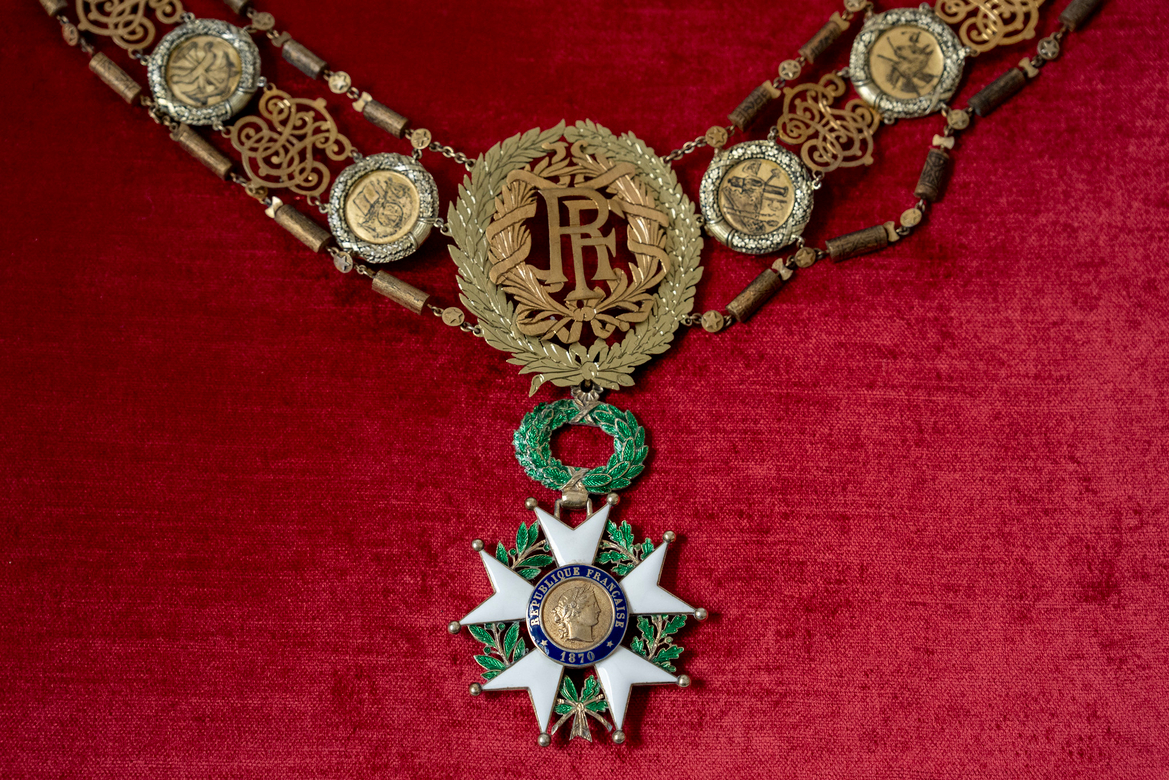
Some of these titles are attributed to him upon taking office. For example, he becomes the Grand Master of the Legion of Honor and the National Order of Merit, two of the highest French distinctions. This role allows him to reward citizens who have distinguished themselves through their civil or military merits.
By tradition, the President also assumes the role of honorary canon of several cathedrals and churches, as well as that of protector of academies and national institutions.
These titles, often inherited from the Ancien Régime, have no executive power, but they confer on the President the responsibility of overseeing the historical heritage and major intellectual institutions of our country.
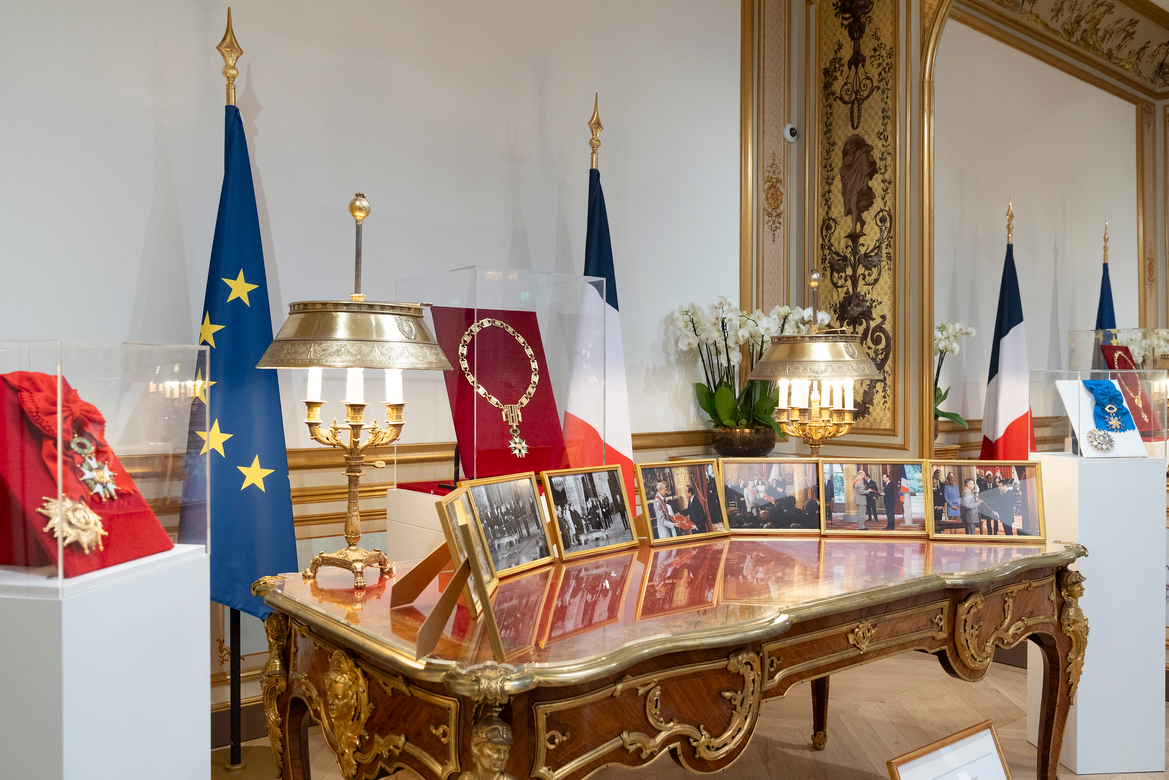
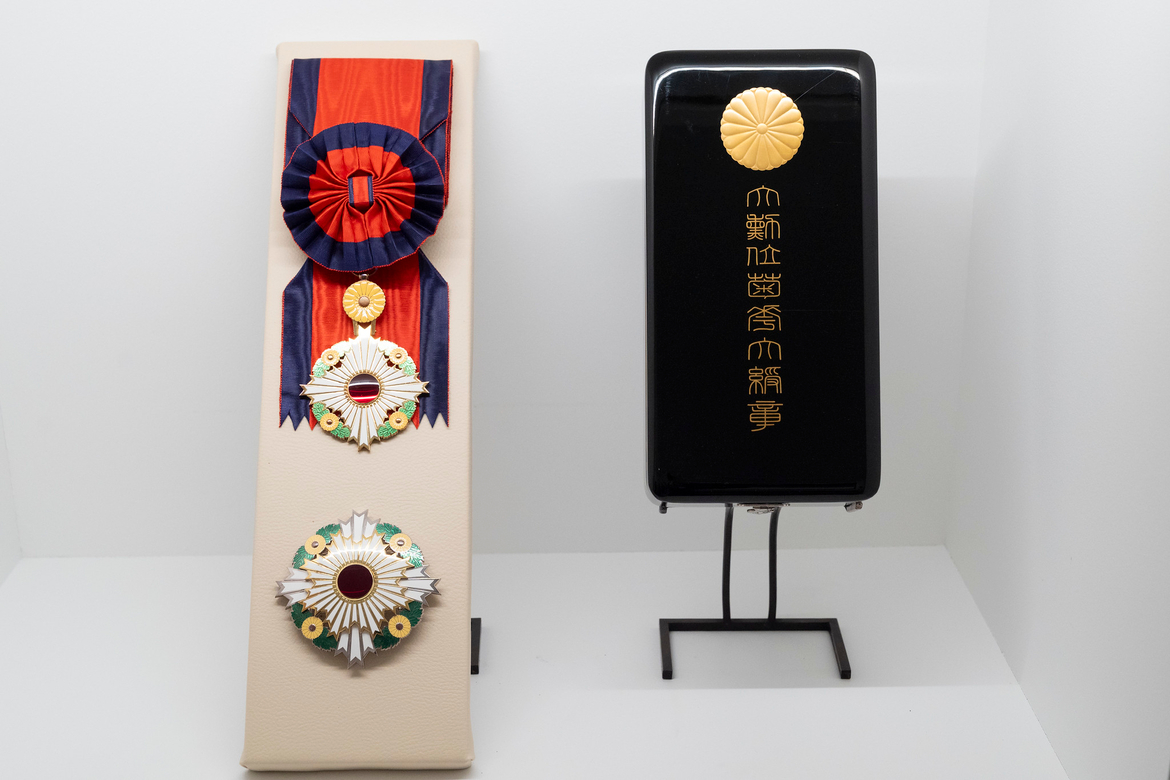
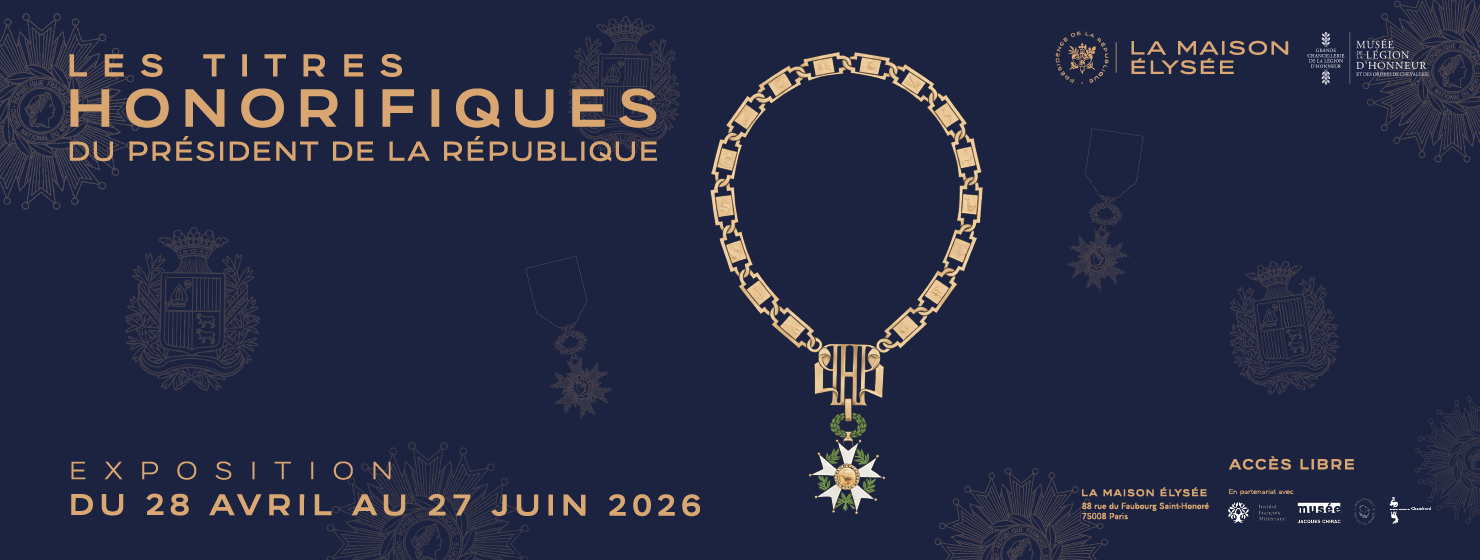
This exhibition, which presents around forty objects and archival documents, invites you to discover these titles, their origins, their significance, and their role in French republican life. It is realized in collaboration with the Museum of the Legion of Honor and Orders of Chivalry and benefits from loans from the Jacques Chirac Presidential Museum, the François Mitterrand Institute, the National Domain of Chambord, and the library of the Institut de France.
This exhibition will be presented in the museum space of the Maison Élysée House from April 28 to June 27, 2026. Admission is free, without reservation.